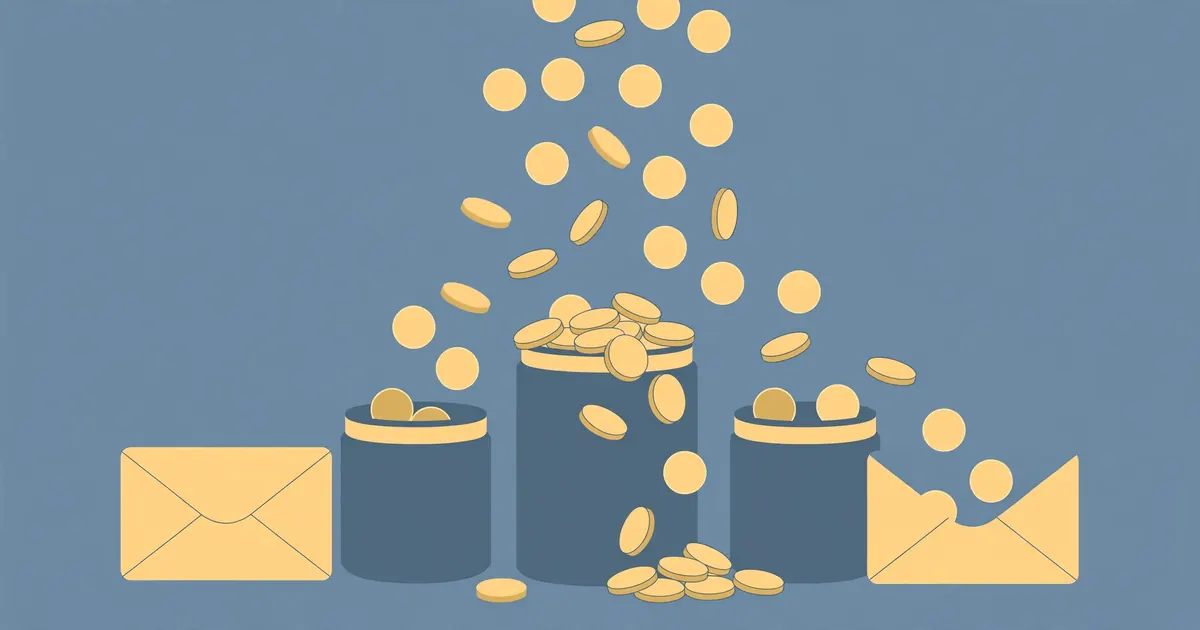
Here's the paradox every indebted household faces: every dollar you save is a dollar not attacking your debt — and your debt is charging interest. The math says throw everything at the balances. But the reality says something else: without any cash buffer, the next car repair, medical bill, or broken appliance goes straight onto a credit card, and you're back where you started.
The CFPB describes an emergency fund as a cash reserve for unplanned expenses — home repairs, car repairs, medical bills — and notes that savings help prevent financial shocks from turning into debt. That last part is the whole argument. An emergency fund while you're in debt isn't about optimizing interest rates. It's about breaking the cycle where every surprise becomes new debt.
This guide resolves the paradox honestly: how much to save, in what order, and how to actually do it on a tight budget — including the trade-offs nobody likes to talk about.
Why "pay debt first, save later" usually backfires
The pure-math argument goes like this: if your credit card charges 24% APR and your savings account earns 4%, every dollar sitting in savings instead of paying down the card costs you money. That's arithmetically true — and practically incomplete, because it assumes no emergencies happen during the payoff period. They will.
Consider what actually happens without a buffer. You're six months into an aggressive payoff plan, balances dropping nicely, and then the transmission fails: $900. With no savings, your options are a credit card (new debt at high interest), a payday lender (far worse), or skipping the repair and risking your job. With even a modest buffer, it's an inconvenience — annoying, but not a derailment.
Research and consumer guidance consistently land in the same place: even a small amount of savings changes outcomes. According to the CFPB, even a starter amount in the range of $500 to $1,000 can help many households avoid taking on debt when common surprises hit. You don't need six months of expenses on day one. You need enough to absorb one bad week.
The three-phase sequence
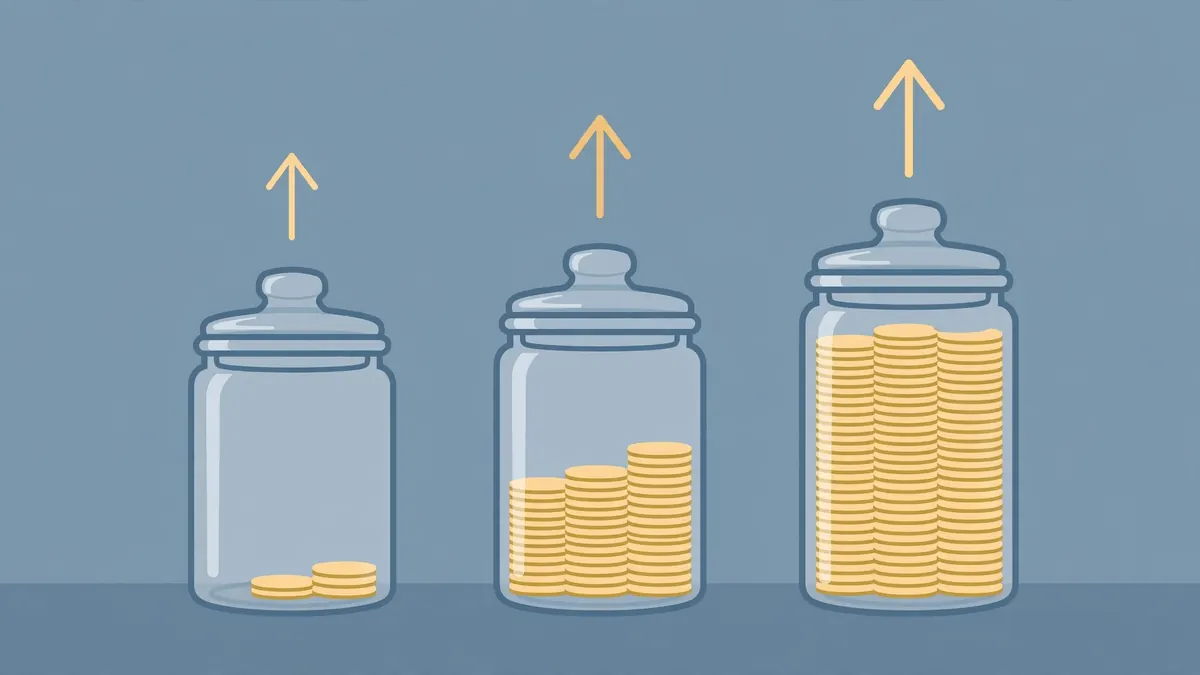
Trying to build a full emergency fund and aggressively pay debt at the same time usually means doing both badly. A clearer sequence:
### Phase 1: Build a small starter buffer first ($500–$1,000)
Before you accelerate debt payments beyond the minimums, build a starter cushion. The $500–$1,000 range is a commonly cited starting target — not a rule, just a practical line where most everyday emergencies (a tire, a minor repair, an urgent care visit) stop becoming new debt.
How long should this take? As long as it takes without wrecking your minimum payments. For many households, redirecting debt-payoff money for 4–8 weeks builds the starter fund. That's a short detour for long-term protection.
Park it in a separate savings account — ideally at a different bank from your checking, or at least a separate account you don't see every day. The point is friction: it should take a deliberate transfer, not a casual tap, to spend it.
### Phase 2: Attack the debt aggressively
With the starter buffer in place, redirect everything extra toward the debt. Pay all minimums first (missing a minimum is always worse than saving slowly), then throw every spare dollar at one target balance using a consistent payoff method. Our budgeting guide lays out the full framework: How to Budget When You're in Debt.
During this phase, the starter fund sits untouched except for genuine emergencies. Define "emergency" in advance, in writing: sudden, necessary, and urgent. A sale is not an emergency. A want is not an emergency. A dead refrigerator is.
If you do raid the buffer for a real emergency, pause the aggressive payoff just long enough to refill it, then resume. That's the system working as designed.
### Phase 3: Build the fuller fund
Once the high-interest debt is gone (or under control), grow the buffer toward the classic rule of thumb: three to six months of essential expenses. The CFPB uses this range as a general emergency-cushion guideline in its consumer guidance. The right number within that range depends on your life: a dual-income household with stable jobs might aim for three months; a freelancer, single-income household, or someone with health issues might aim for six or more.
Notice the order: starter buffer → debt attack → full fund. Each phase protects the next.
Practical tactics for saving on a genuinely tight budget
"Just save more" is useless advice when there's nothing left at month's end. These tactics are for the reality where the budget is already squeezed:
Automate a small amount first. Set up an automatic transfer of $25 or even $10 per paycheck into the separate savings account. Small automatic transfers beat large irregular intentions every time, because they happen before you can spend the money. Increase the amount only after the habit sticks.
Save the "invisible" money. Tax refunds, cash-back rewards, rebates, birthday money, the extra paycheck in a three-paycheck month — route windfalls to the buffer before they dissolve into spending. Decide this rule once, in advance.
Run a 30-day spending audit. For one month, track every dollar (a notebook works fine). Most people find one or two recurring leaks — subscriptions they forgot, food spending they underestimated, fees they didn't notice. Cancel or cut one leak and redirect exactly that amount to savings. This is the core of the cut-and-redirect approach in our budgeting framework.
Sell the idle stuff. The garage, the closet, the storage unit you're paying for — converting unused things into a starter buffer is one of the fastest ways to fund Phase 1. Price to move, not to maximize.
Bank the raise, the bonus, the side income. Any new money that arrives should default to the buffer (Phase 1) or the debt (Phase 2) — not to lifestyle. This is a temporary rule, not a permanent vow of austerity.
Use a separate, boring account. A plain savings account at an FDIC-insured bank or an NCUA-insured credit union is ideal: safe, liquid, slightly out of sight. This is not investing money — the stock market has no place in an emergency fund, because emergencies don't wait for recoveries.
The honest trade-offs
Let's not pretend this is painless.
Trade-off 1: You'll pay more interest during Phase 1. Every month you spend building the starter buffer instead of hammering the debt, interest accrues on the balances. On $8,000 of credit card debt at 24% APR, two months of minimum-only payments costs roughly $300+ in interest versus an aggressive payoff. That's real money — and it's the price of insurance against a much more expensive derailment. Name it, accept it, move on.
Trade-off 2: It feels slow. Watching debt balances barely move while you "save" can feel like treading water. Reframe it: you're not treading water, you're building the floor the payoff plan stands on. The months feel slow; the years compound.
Trade-off 3: The buffer will get used — that's its job. The first time you spend $600 of your hard-saved $1,000 on a car repair, it'll sting. But compare it to the alternative: $600 on a credit card at 24%, which is what would have happened three months ago. The fund did exactly what it was for. Refill it and continue.
Trade-off 4: When debt is extremely high-interest, the order gets debatable. If you're facing payday-loan-level rates (triple-digit APRs), the math emergency may outweigh the buffer emergency — getting out of a 300% APR trap is itself the emergency. In genuinely extreme cases, consider speaking with a nonprofit credit counselor (NFCC member agencies offer free or low-cost counseling) about prioritization. This is one of those "consider speaking with a qualified professional" moments.
What counts as an emergency (and what doesn't)
Write your definition down before you need it. A workable one:
Emergencies: job loss, medical/dental urgency, critical home repair (roof leak, dead furnace), car repair you need to get to work, emergency travel for family crisis.
Not emergencies: sales, holidays, vacations, "I've been good and deserve it," non-urgent upgrades, lending to others (however worthy — you can't pour from an empty buffer), investing "opportunities."
The gray zone — a kid's school expense, a pet emergency, a bill that's higher than expected — is where judgment lives. A good test: will this become more expensive debt if I don't handle it now? If yes, the buffer is doing its job.
Protecting the fund from yourself
The biggest threat to an emergency fund isn't emergencies — it's gradual, reasonable-sounding erosion. Defenses:
- Name the account something like "Emergency Only" — it sounds silly, but labeled accounts get raided less.
- Don't link it to your debit card. No ATM access, no overdraft "protection" drawing from it.
- Require a cooling-off conversation. If you share finances, agree that any withdrawal needs a 24-hour wait and a discussion (except true urgencies like medical care).
- Review it monthly, briefly. A two-minute check during your regular money review keeps it visible without obsessing. If it dipped, note why and set the refill plan.
How this connects to rebuilding credit
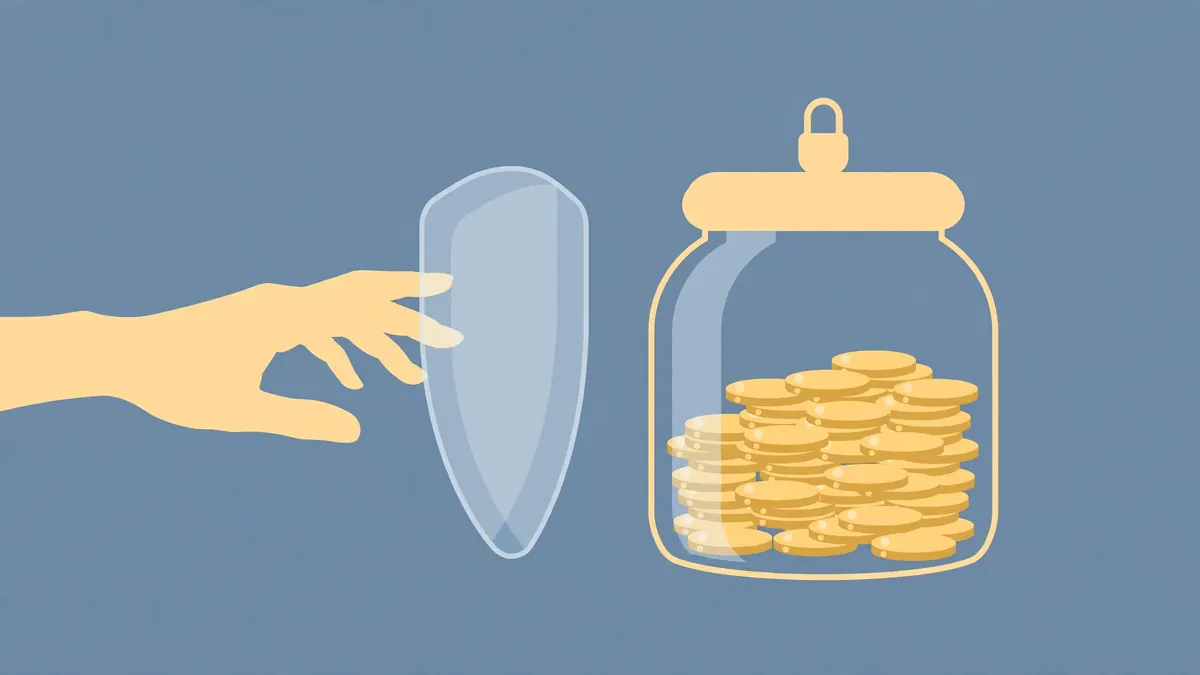
Here's the part people miss: an emergency fund is a credit-rebuilding tool. Every emergency absorbed in cash is a missed payment avoided, a collection avoided, a new balance avoided. The payment history you're carefully building — the subject of our credit rebuilding playbook — survives precisely because the buffer exists. Savings protect the score as surely as on-time payments build it.
The bottom line
Build a small starter buffer first ($500–$1,000 is the commonly cited starting target), then attack debt hard, then grow toward three to six months of expenses. Automate small transfers, keep the fund separate and boring, define emergencies in advance, and accept the short-term interest cost as insurance. It's not the mathematically perfect path. It's the path that survives contact with real life.
DebtRelief.site publishes general educational information only — not financial, legal, or tax advice. Consider speaking with a qualified professional about your situation.