
Debt settlement is one of the most advertised — and most misunderstood — ways of dealing with unsecured debt in the United States. Commercials make it sound simple: you pay less than you owe, and your problems fade away. The reality has more steps, more waiting, and more consequences than any ad will tell you.
This guide walks through the plain mechanics — what a company actually does for you — and what it costs you beyond the fee: the damage to your credit, the possibility of being sued, and the tax bill that can arrive on the debt you “saved.” No hype, no sales pitch.
What debt settlement is (and isn’t)
Debt settlement means negotiating with creditors to accept less than the full amount you owe as payment in full. If you owe $10,000 on a credit card and the creditor accepts $4,000 as a complete payoff, the remaining $6,000 is forgiven. The account is then typically reported as “settled” — paid for less than the full balance.
That is the entire concept. Here is what it is not:
- It is not a loan, and nothing is consolidated into one new debt.
- It is not a government program. There is no federal “debt settlement program” — anyone telling you otherwise is running a scam pitch.
- It does not cover every kind of debt. Settlement is used almost exclusively for unsecured debts: credit cards, medical bills, personal loans, and some private debts. Creditors with collateral — your mortgage lender, your auto lender — generally have no reason to settle, because they can simply take the property.
- It is not instant, and it is not free of consequences. The process typically takes two to four years for people who complete it, and the trade-offs are significant.
Debt settlement can be done two ways: negotiate with creditors yourself, or hire a company to do it. The mechanics below describe the company-run version — but the steps are nearly identical if you do it yourself, minus the fee.
The mechanics, step by step
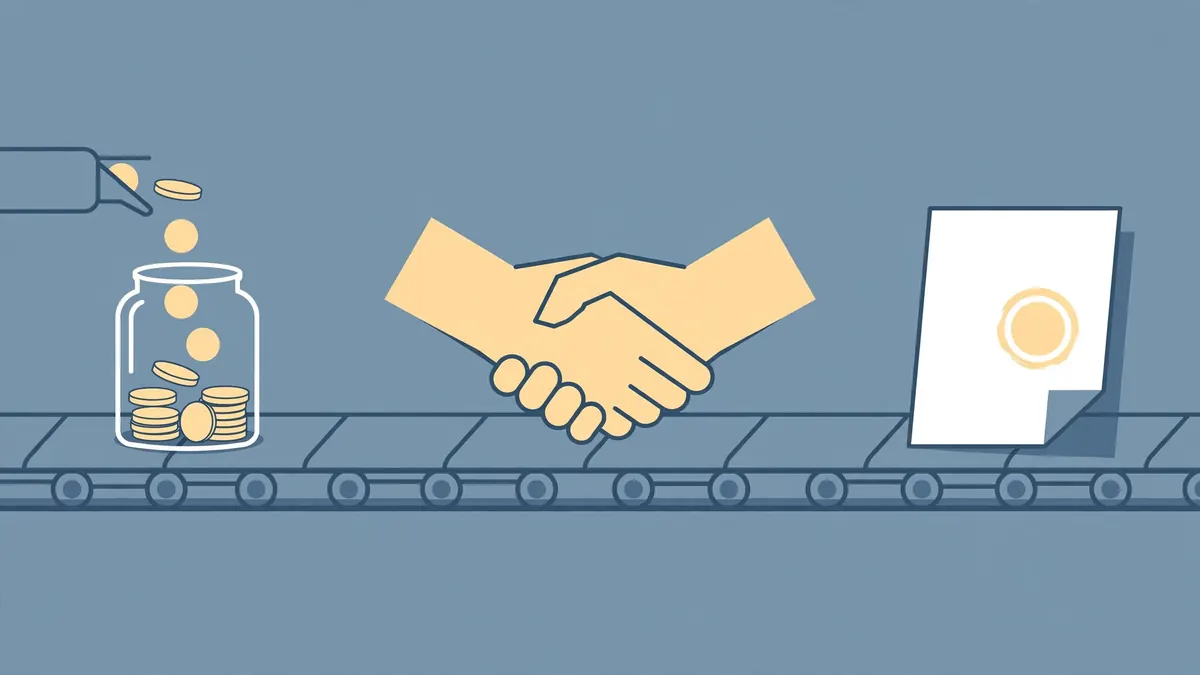
### Step 1: You stop paying your creditors
This is the part ads rarely dwell on. Debt settlement programs begin with you intentionally falling behind on the enrolled debts. You stop making your monthly payments to the credit card companies or other creditors.
Why would anyone do this? Because creditors are generally unwilling to negotiate a discount while an account is current. It is the delinquent account — the one sliding toward charge-off — that a creditor may prefer to settle for a lump sum rather than sell to a collector or write off entirely.
So the program starts with your accounts going 30, 60, 90, and eventually 120+ days past due. Late fees pile up, interest keeps accruing, and your credit score begins dropping immediately.
### Step 2: You save into a dedicated account
Instead of sending payments to creditors, you make one monthly deposit into a special bank account — called a dedicated account (sometimes a “special purpose account”). This account is in your name and is typically administered by an independent third-party company, not the settlement company itself.
The monthly deposit is based on what you can afford, not on what you owe. Over months and years, this account builds up a lump-sum balance — the ammunition for the negotiations, since creditors settle when they see real money available now.
The dedicated account is also where the settlement company’s fee eventually comes from — but only after settlements are reached. Under the FTC’s Telemarketing Sales Rule, the company cannot touch its fees until it has actually settled a debt. You remain the owner of the account, and legitimate companies return your money (minus fees already earned) if you quit the program.
### Step 3: The company negotiates, one debt at a time
Once your dedicated account holds enough to make a credible offer on a particular debt — usually one of the smaller balances first — the settlement company contacts the creditor or the collection agency holding the debt and proposes a lump-sum payment in exchange for marking the account settled.
Creditors are not required to negotiate. Some refuse to work with settlement companies at all. Others will only deal with the consumer directly. So there is no promise of how many debts will settle or at what amounts — outcomes vary enormously by creditor, balance, how long the account has been delinquent, and the skill (and honesty) of the negotiator.
When a creditor does agree, there is a settlement agreement in writing: a specific lump-sum figure, a payment date, and terms stating the account will be reported as settled. You must agree to the terms, and you must make at least one payment under the agreement, before the settlement company can collect its fee for that debt.
### Step 4: Settlements are paid, accounts close, the cycle repeats
Each settled debt is paid out of the dedicated account, the company takes its fee for that settlement, and the next debt becomes the target. Accounts are reported to the bureaus as “settled” rather than “paid in full,” which matters for your credit history.
This continues until the enrolled debts are resolved — or until you drop out, which many people do. Programs are long and expensive, and the accounts keep deteriorating in the meantime. If you leave partway, you keep whatever is left in your dedicated account (minus earned fees), but the credit damage of months of missed payments stays with you.
### How long does it take?
There is no fixed timeline. Industry materials commonly describe programs lasting two to four years, but the honest answer is that it depends on how much you enroll, how much you can deposit monthly, and whether your creditors agree to negotiate. The first settlement often arrives several months after enrollment, with the rest spread across the life of the program — and some accounts may never settle at all.
The real consequences nobody advertises
The mechanics are only half the story. Debt settlement has consequences that outlast the program, and understanding them before you enroll is the difference between an informed choice and an expensive surprise.
### Your credit takes serious damage
This is not a side effect — it is baked into the design. Settlement requires your accounts to become delinquent, and payment history is the largest factor in credit scoring. Expect your score to fall substantially, and expect the damage to linger.
Each account will show a history of missed payments, ending in a “settled” status — meaning you did not pay what you originally agreed to pay. The Consumer Financial Protection Bureau notes that negative information like this can remain on your credit report for up to seven years from the date of the delinquency. (The bankruptcy alternative can remain for up to ten years. Neither option leaves your credit untouched.)
### Creditors can sue you — and some do
While your accounts sit unpaid, creditors and collection agencies retain every legal remedy available to them, including filing a lawsuit to collect the debt. A judgment against you can lead to wage garnishment or bank account levies, depending on your state’s laws.
The FTC requires debt settlement companies that sell by phone to disclose this exact risk: settlements can expose you to lawsuits from creditors. If a company’s pitch glosses over this or claims it can “stop all lawsuits,” treat that as a red flag, not a reassurance. For the warning signs of dishonest operators, see debt settlement scams and red flags.
### You may owe taxes on the forgiven amount
This is the consequence that surprises the most people. The IRS generally treats canceled or forgiven debt as taxable income. If a creditor forgives $6,000 of your balance in a settlement, that $6,000 is generally added to your taxable income for the year — reported to you (and the IRS) on Form 1099-C when the canceled amount is $600 or more.
That does not automatically mean you will owe tax on every settled dollar. The tax code includes exclusions — most notably for debts discharged in bankruptcy and for taxpayers who are insolvent (meaning their total liabilities exceed the fair market value of their assets at the time the debt is canceled). Claiming an exclusion generally requires filing IRS Form 982 with your return.
The rules here are genuinely tricky, and getting them wrong can mean an underpayment notice from the IRS. This is not tax advice — consider speaking with a qualified tax professional before or after settling debts, so the tax bill does not become a second crisis.
### Balances can grow while you wait
Between enrollment and settlement, interest and late fees keep accruing on each account, so the balance being negotiated may be larger than what you enrolled. A $10,000 balance can grow by the time a creditor agrees to talk — and the company’s fee is calculated on the debt amount, so the cost grows too. For the full breakdown, see debt settlement costs and fees.
The FTC’s upfront-fee ban: your key protection
In 2010, the Federal Trade Commission amended its Telemarketing Sales Rule to prohibit for-profit debt relief companies that sell their services by telephone from charging any fees until they have actually delivered results. Specifically, a company may not collect a fee until:
- it has successfully settled or otherwise changed the terms of at least one of your debts;
- there is a written settlement agreement (or debt management plan) that you have agreed to; and
- you have made at least one payment to the creditor under that agreement.
The rule also requires companies to disclose key facts before you enroll — including how long the program will take, and that settling debts will damage your credit and may expose you to lawsuits.
What this means for you in practical terms: any company that demands payment before settling a debt is either breaking federal law or operating outside the rule’s coverage. (The rule covers telemarketing sales; some companies structure their sales to argue they are exempt, which is itself worth scrutinizing.) A demand for upfront fees — setup fees, retainer fees, “program” fees paid before any settlement — is one of the clearest warning signs in this industry.
Debt settlement vs. the alternatives
Settlement is one option among several, and it tends to suit people who are already seriously behind and cannot realistically repay in full. But it is worth knowing what you are choosing instead of:
- Negotiating directly with creditors. You can call your creditors yourself and ask for hardship programs, reduced payoffs, or payment plans. There is no fee, and you skip the middleman. Creditors have entire departments for this.
- A debt management plan (DMP) through a nonprofit credit counseling agency. A DMP repays your debts in full — usually at reduced interest rates — over three to five years, with a single monthly payment. It does not reduce principal, but it avoids the deliberate-delinquency strategy. See debt settlement vs. debt management plan for a side-by-side comparison.
- Bankruptcy. Chapter 7 or Chapter 13 is a court-supervised process with its own costs and consequences — but also legal protections, including the automatic stay that halts most collection activity. For many people, it is worth comparing settlement against bankruptcy honestly rather than treating bankruptcy as unthinkable.
None of these options is right for everyone, and this article cannot tell you which fits your situation. That is a conversation for a qualified professional — a nonprofit credit counselor, a tax professional, or a licensed bankruptcy attorney — who can look at your actual numbers.
Questions to ask before you sign anything

If you are considering a debt settlement company, the FTC suggests getting clear answers in writing before you enroll:
- What exactly are your fees, and when precisely do you collect them — as a percentage of the enrolled debt, or of the debt at settlement?
- Which of my creditors have you settled with before, and which refuse to work with settlement companies?
- What happens to my money in the dedicated account if I cancel?
- How long do you estimate the program will take, and what could make it take longer?
A legitimate company answers these directly. An evasive one is telling you everything you need to know.
The bottom line
Debt settlement is a real, legal option for unsecured debt — but it works by damaging your credit on purpose, exposes you to lawsuits while accounts sit unpaid, can create a tax bill on the forgiven amounts, and costs a meaningful fee on top of everything else. The FTC’s upfront-fee ban gives you one solid layer of protection, but the rest is on you: read the contract, ask the hard questions, compare the alternatives, and get professional guidance before committing years of payments to a strategy whose outcome nobody can promise.
DebtRelief.site publishes general educational information only — not financial, legal, or tax advice. Consider speaking with a qualified professional about your situation.